
A cleaner mix, a bigger system
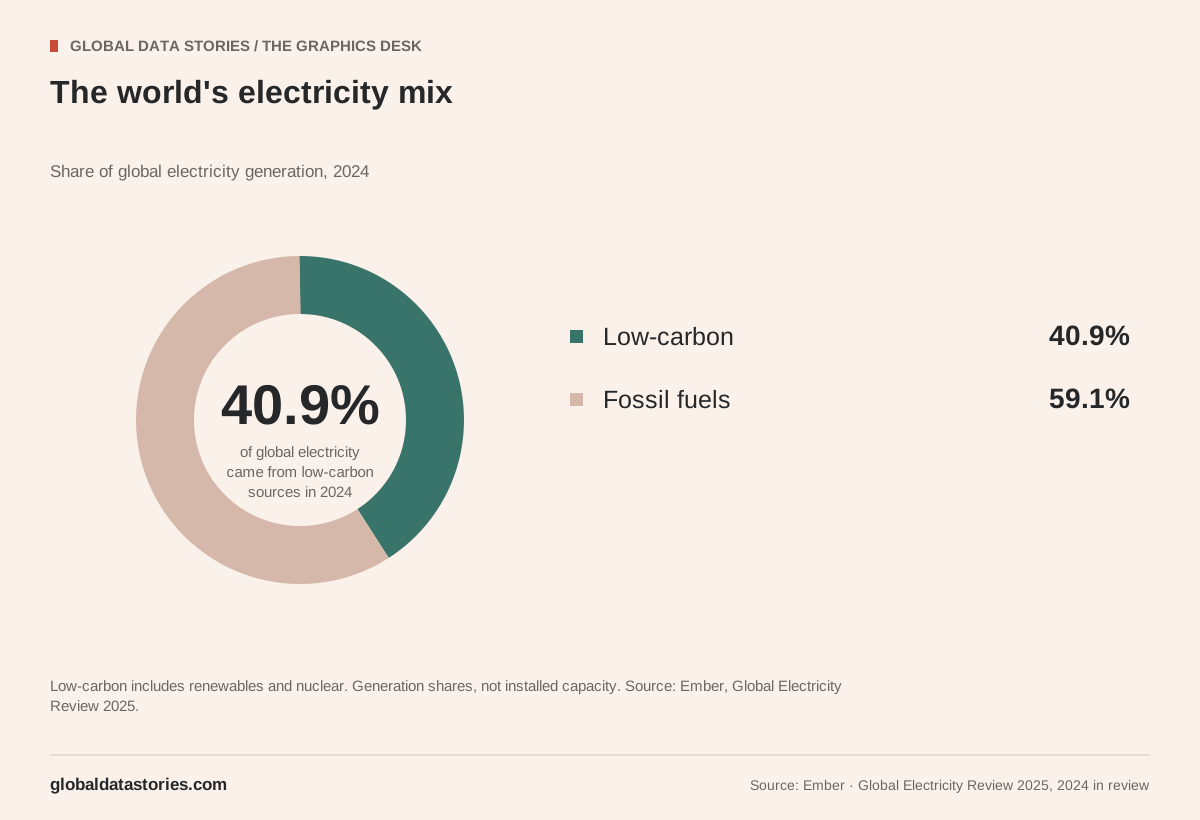
Low-carbon sources supplied 40.9% of the world's electricity in 2024, according to Ember's Global Electricity Review 2025. That leaves 59.1% from fossil fuels. Renewables and nuclear together passed a threshold that the much smaller global electricity system last reached in the 1940s.
Yet fossil generation increased by 1.4%. These results can coexist: the low-carbon share grew, but total demand grew too. A smaller slice of a larger total can still contain more electricity.
Why demand matters
Ember attributes much of the additional pressure to hotter weather. Its analysis says low-carbon growth could have covered the increase in demand without the temperature effect.
The IEA's separate Global Energy Review 2025 helps explain the demand side. Buildings accounted for nearly 60% of the increase in global electricity consumption in 2024. Air conditioning and new data centres were among the drivers. Industrial electricity use also rose as manufacturing activity increased.
Read both measures
The chart answers one question: where did the year's electricity come from? It cannot, on its own, tell us whether fossil plants produced more or less than the year before. For that, readers need the change in absolute generation alongside the change in share.
That is the useful distinction behind this milestone. The system was getting cleaner by share while still using more fossil power in total.