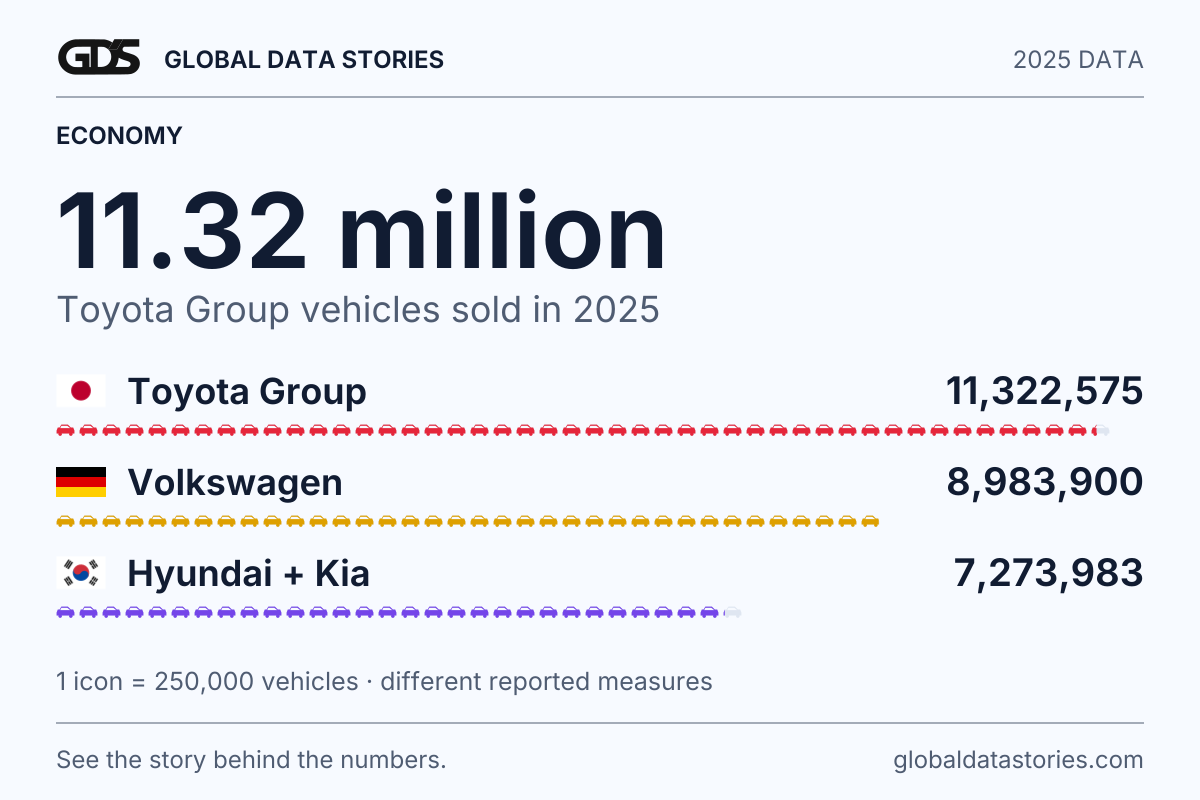
Toyota sells 11.3 million vehicles. Who can catch it?
Toyota leads the global volume race, while BYD has become a mass-market force. Company filings reveal the scale—and the limits—of the comparison.

Explore every story, chart and perspective from the GDS research desk. Search by topic or choose a section.
15 stories
Toyota leads the global volume race, while BYD has become a mass-market force. Company filings reveal the scale—and the limits—of the comparison.
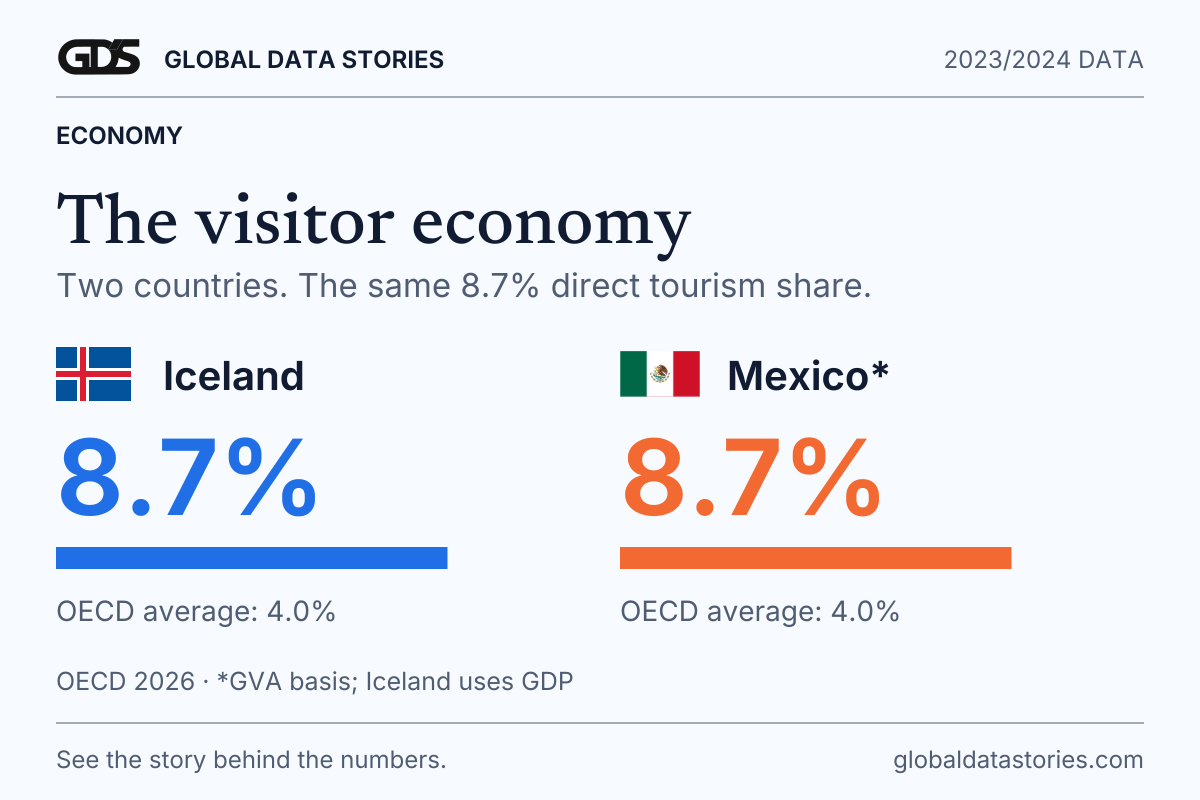
Tourism contributes 8.7% in both countries in the OECD’s latest comparison. The full picture depends on what is counted—and on who does the travelling.
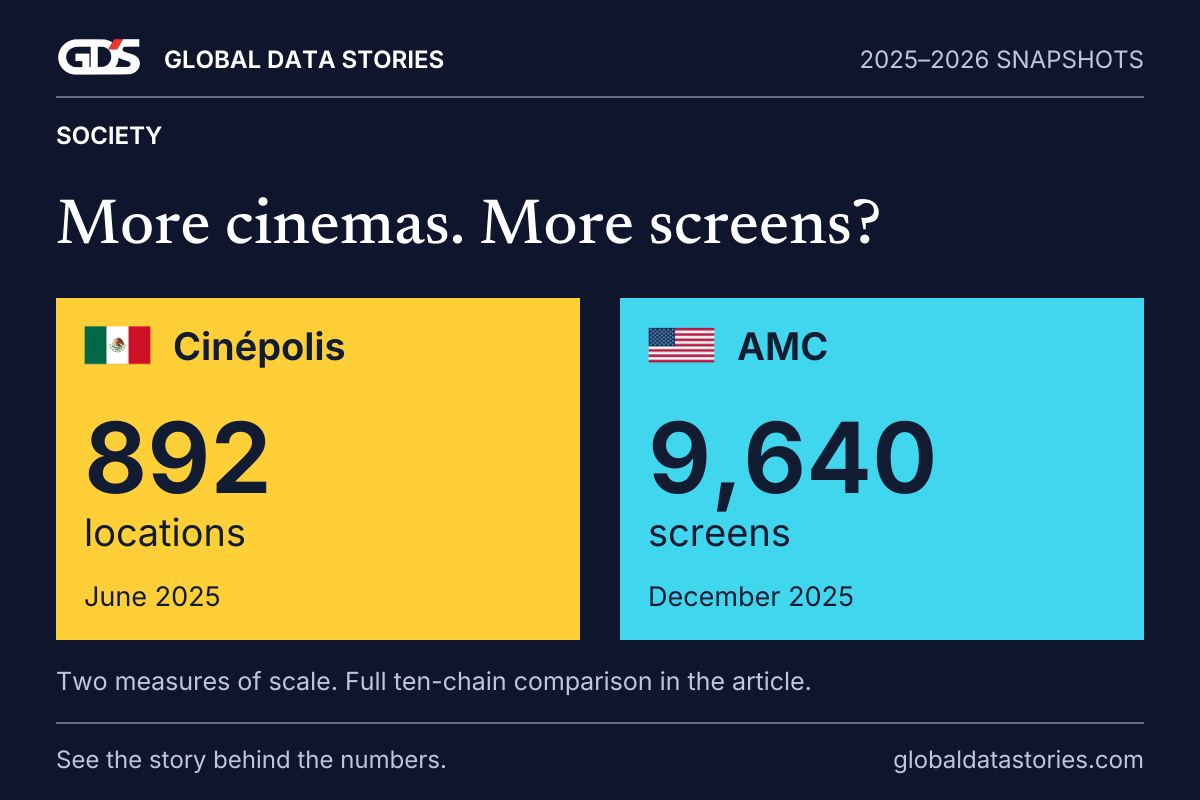
Cinépolis leads a ten-chain comparison by locations. AMC has more screens. The difference reveals two very different ways to build a cinema business.
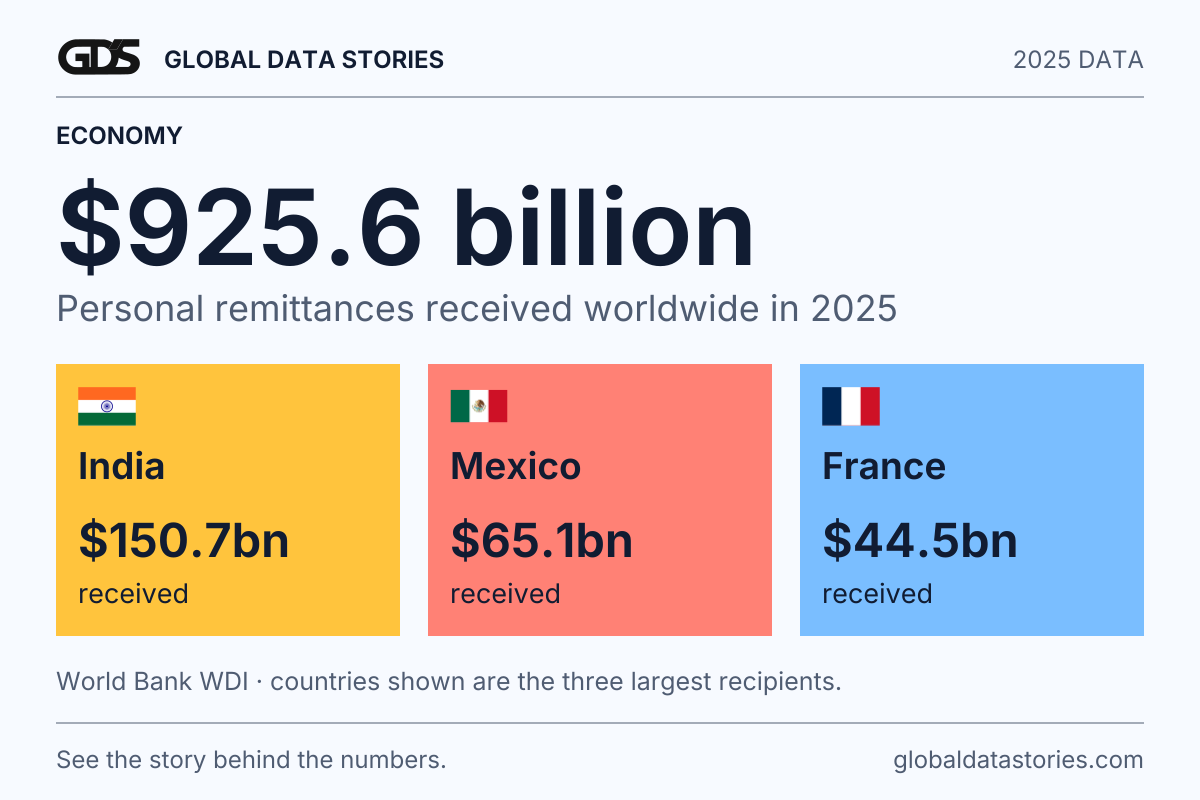
India received $150.7 billion in personal remittances in 2025. A worldwide breakdown shows why the biggest recipient and the most dependent economy are different stories.
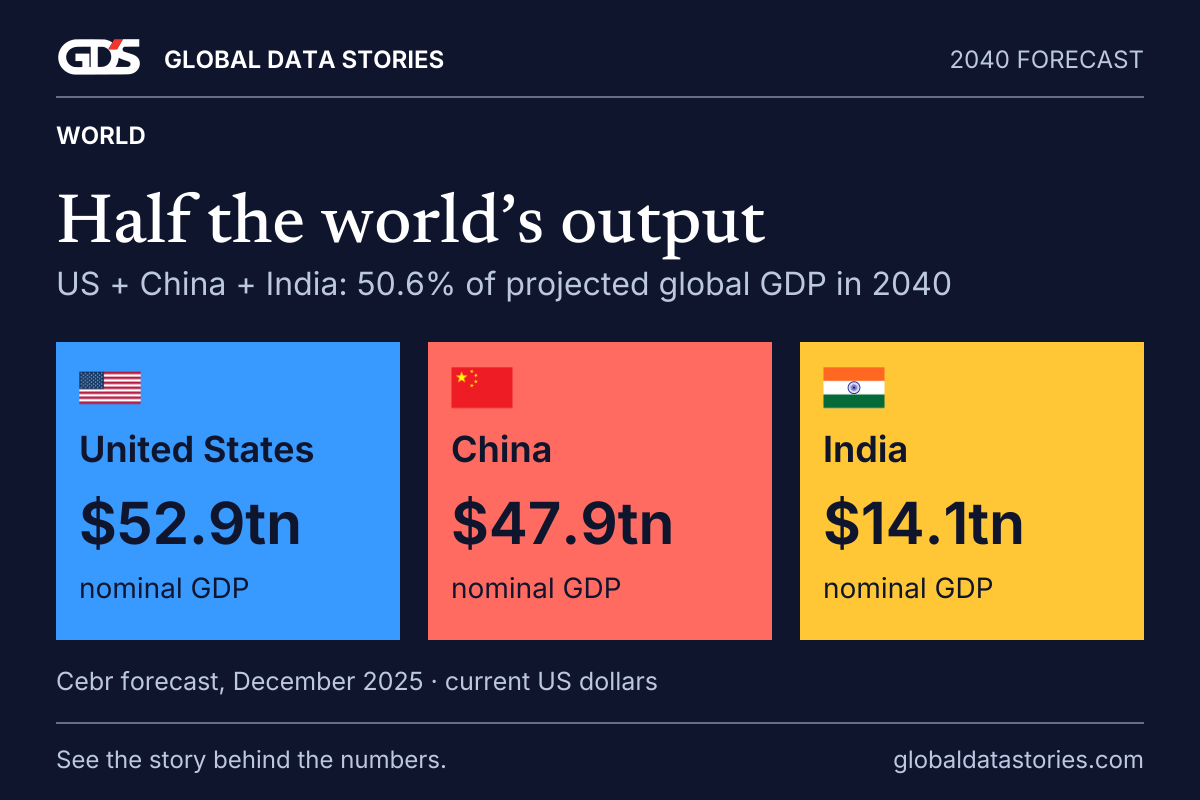
Cebr projects a $227 trillion world economy, with the US, China and India accounting for about half. Here is what the forecast says—and what nominal GDP leaves out.
The 2024 electricity mix shows why a cleaner share does not automatically mean less fossil generation.
Solar supplied more than three-quarters of the renewable generating capacity added worldwide in 2024.
Electric cars took more than a fifth of new sales in 2024 but remained a much smaller share of cars already on the road.
The IEA's 2026 outlook puts data-centre electricity demand at around 950 TWh in 2030, up from 485 TWh in 2025.
A single warm year and a long-term climate threshold are different measures, even when both are expressed in degrees.
The UN's 2024 projection puts the global peak at roughly 10.3 billion people in the mid-2080s.
Internet use reaches 76% of the world's population in ITU's 2026 estimates, leaving a substantial gap.
By 2024, some regions had moved well beyond pre-pandemic visitor numbers while others were still catching up.
The World Bank's end-2024 estimate shows how large officially recorded remittance flows had become.
In 2024, the distance-adjusted work of seaborne trade grew much faster than the amount of cargo.
Try a broader search or choose a different section.