Two leaders, two measures
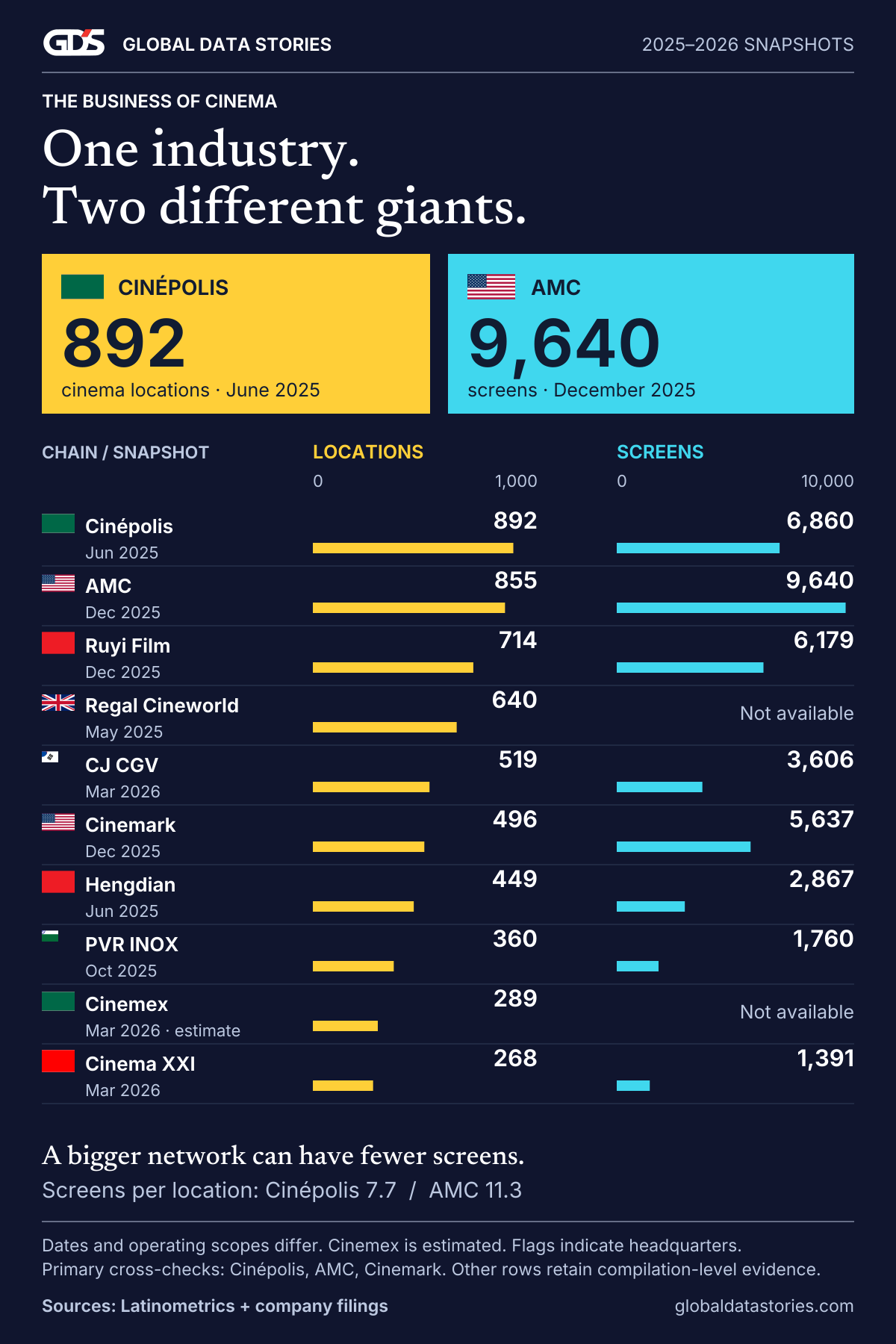
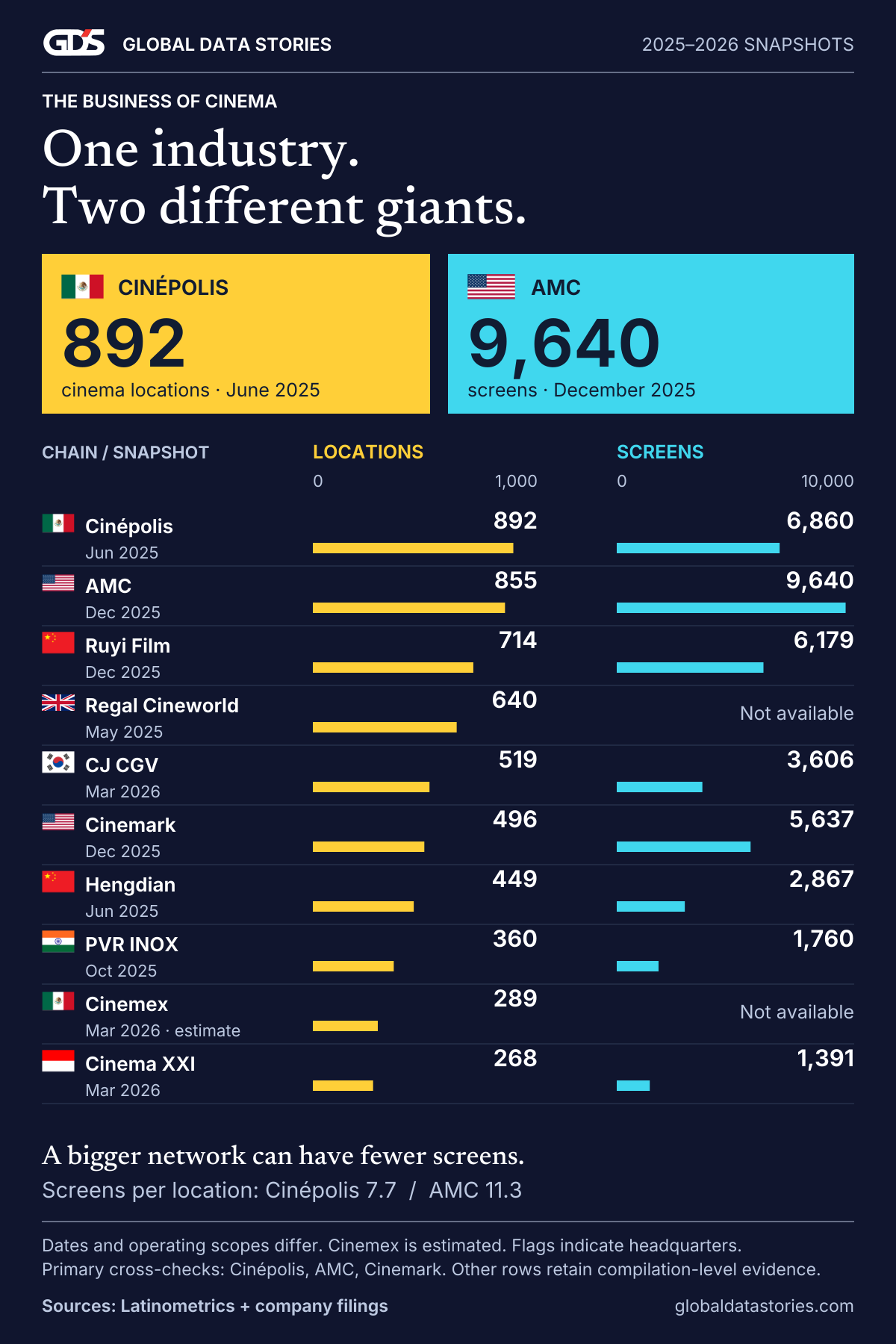
Cinépolis has 892 cinema locations in Latinometrics’ ten-chain comparison, ahead of AMC’s 855. But switch the measure from locations to screens and AMC leads: 9,640 against 6,860. The underlying dates differ—June 2025 for Cinépolis and December 2025 for AMC—so this is a documented set of snapshots, not a live census taken on one day. [1] [2] [3]
A location is a cinema complex. A screen is one auditorium within it. A multiplex with 15 screens counts as one location, just as a smaller four-screen cinema does. That simple distinction changes the meaning of “largest”. Locations describe the footprint; screens describe one aspect of exhibition capacity.
Using the reported totals, Cinépolis averages about 7.7 screens per location and AMC about 11.3. Those are calculated portfolio averages, not the size of a typical individual cinema. They also do not measure seats, showtimes or attendance. A screen with many seats and frequent showings can offer very different capacity from another screen.
The comparison behind the headline
The compiled location counts put Ruyi Film at 714, Regal Cineworld at 640 and CJ CGV at 519. Cinemark follows with 496, then Hengdian with 449, PVR INOX with 360, Cinemex with an estimated 289 and Cinema XXI with 268. Each chain’s date is retained in the graphic and table. We have not described the list as an independently verified census of every cinema circuit worldwide. [1]
The leading figures have primary-source support. CJ’s July 2025 partnership announcement describes Cinépolis as operating 892 theatres and 6,860 screens. AMC’s 2025 filing reports 855 theatres and 9,640 screens, covering locations it owned, operated or had interests in. Cinemark’s year-end filing reports 496 theatres and 5,637 screens. The ownership language is another reason to avoid pretending every corporate footprint is defined identically. [2] [3] [4]
For the remaining chains, the dated compilation is the stated source. Its Cinemex figure is explicitly an estimate. Missing screen figures for Regal Cineworld and Cinemex remain unavailable; they have not been filled with zero or reconstructed from a guess.
Why a smaller footprint can contain more screens
The AMC–Cinépolis contrast shows why a single ranking can conceal the structure of a business. With more auditoriums at each site, an operator can show more films or offer more simultaneous sessions without opening another address. More locations can instead place cinemas in more neighbourhoods or markets. Neither arrangement automatically generates higher returns.
AMC reported 2025 revenue of $4.849 billion and a net loss of $632.4 million. Its results also reported $387.5 million of adjusted EBITDA, a separate measure with company-defined adjustments. The coexistence of those numbers is a reminder that a large physical circuit does not by itself establish profitability. [5]
CJ and Cinépolis’ partnership announcement covered 30 new SCREENX auditoriums and upgrades to 20 existing 4DX auditoriums. An upgrade can change the product sold at an existing location without adding a new cinema address. Counting buildings alone would miss that investment. These were announced plans, rather than evidence that every project had already opened. [2]
A snapshot should keep its date
The cinema estate keeps changing. Cinemark’s June 2026 filing reported 495 theatres and 5,620 screens, compared with 496 and 5,637 at the end of 2025. We discuss that newer observation here rather than silently replacing one row in a historical compilation and calling the whole result current. [6]
For a fuller operating comparison, the next dataset would need matching dates, ownership rules, screen counts, seats, admissions and revenue. Revenue would also need a currency and period convention. Until those are aligned, a visually precise table can only answer the narrower question its source supports.
The useful headline is therefore the contrast: Cinépolis has more addresses in this comparison, while AMC has more auditoriums. Both statements can be true. The choice of measure tells the reader which kind of scale is being discussed.